
Newsletters
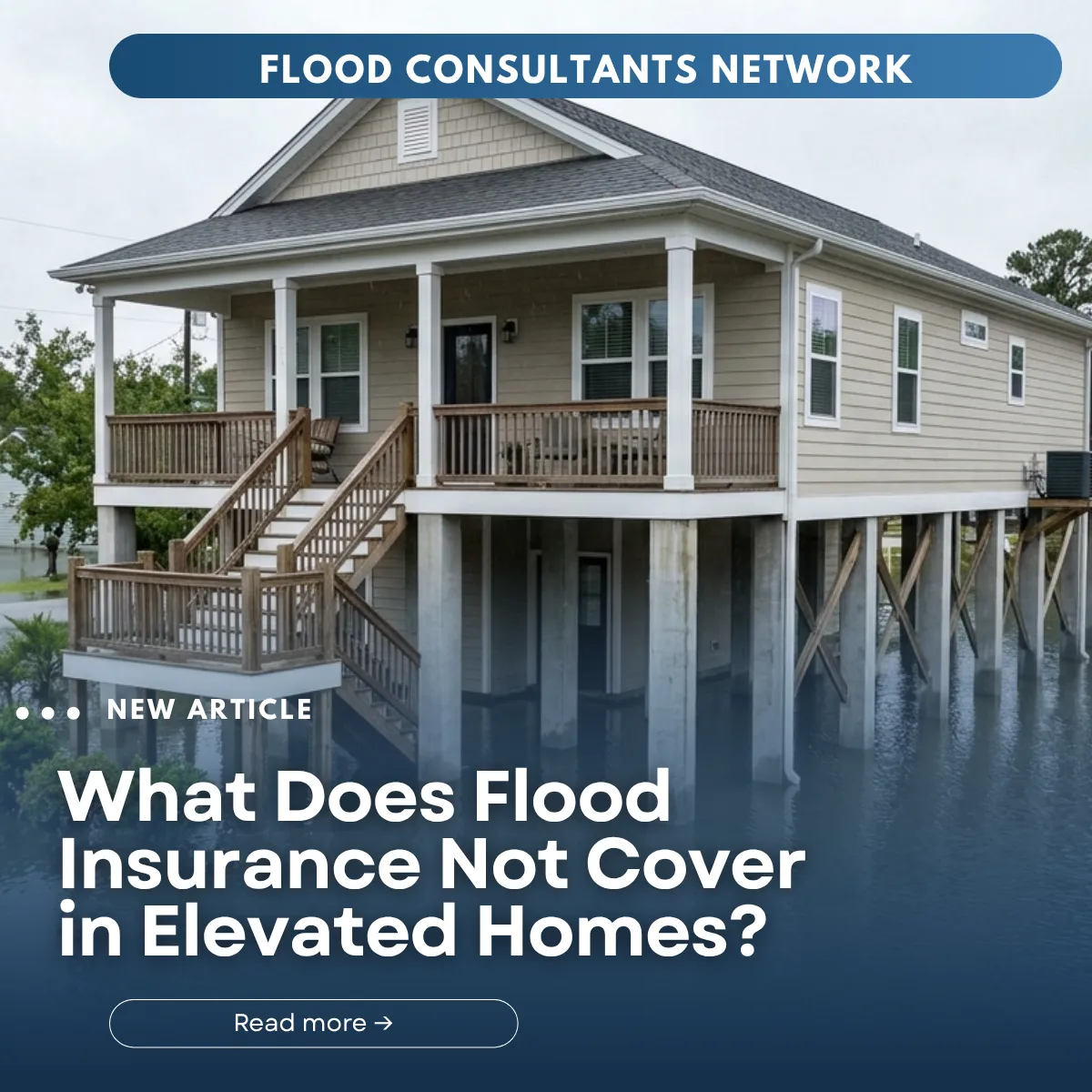
What Does Flood Insurance Not Cover in Elevated Homes? What Property Owners Need to Understand Before a Storm
A property owner invested over $1 million into a coastal home.
The structure was elevated, designed to reduce flood risk and protect the main living space.
And it worked.
Floodwaters never reached the primary living area.
But everything below it, the enclosed lower level, was fully flooded.
A finished guest space.
Bedroom.
Kitchen.
Living area.
Bathroom.
All damaged.
And most of it was not covered.
This is where many property owners encounter a flood insurance recovery gap, not because the structure failed, but because expectations about coverage did.
Flood Insurance Does Not Follow Property Use
Flood insurance does not reimburse based on how a space is built, finished, or used.
It pays based on:
Defined coverage categories
Structural eligibility rules
Elevation-based limitations
In elevated homes, the lower level is treated differently.
Even when built out as a complete living space, reimbursement is typically limited to:
Structural components
Electrical systems
Select essential elements
Not full interior finishes.
Not living space functionality.
This creates a disconnect between:
How the property is used
How the policy pays
Where the Financial Gap Appears
From the owner’s perspective, the lower level was usable square footage.
It functioned as a complete extension of the home.
But from an insurance standpoint, that same space was not fully eligible for reimbursement as a finished living area.
When the flood occurred:
The elevated structure performed as intended
The lower level sustained full damage
The insurance payment reflected coverage rules — not actual rebuild cost
The result:
A significant out-of-pocket financial loss.
Not because the property lacked insurance.
But because the policy did not align with how the space was expected to be covered.
What Property Owners Need to Understand
For elevated properties, especially in coastal or flood-prone areas:
Flood insurance does not reimburse based on design intent or livable use.
It reimburses based on:
Structure classification
Elevation compliance
Coverage eligibility rules
That means:
Finished lower levels may not be reimbursed as expected
Guest spaces and living areas below elevation may not qualify as covered space
Financial exposure can exist even when the main structure is protected
This is where many owners believe they are fully covered — but are not.
The Risk Isn’t the Flood
The structure performed correctly.
The elevated design worked.
The main home was protected.
Yet the financial loss still occurred.
Because the real risk was not the water.
It was the gap between expected coverage and actual reimbursement.
The FCN Perspective
At Flood Consultants Network, we focus on identifying these gaps before they turn into financial outcomes.
We do not sell insurance.
We do not negotiate claims.
We do not perform construction.
We provide clarity.
We help property owners understand:
How flood insurance actually pays
How different parts of a structure are treated
Where coverage limitations create financial exposure
So decisions can be made with full visibility not assumptions.
Flood is not just a structural risk.
It is a financial one.
If you own a coastal or flood-zone property, especially an elevated structure, the most important step is understanding your exposure before a storm.
Request a Free Claim & Policy Review
https://floodconsultantsnetwork.com/calendar
Know what your policy will and will not cover before you ever need to rely on it.