
Newsletters
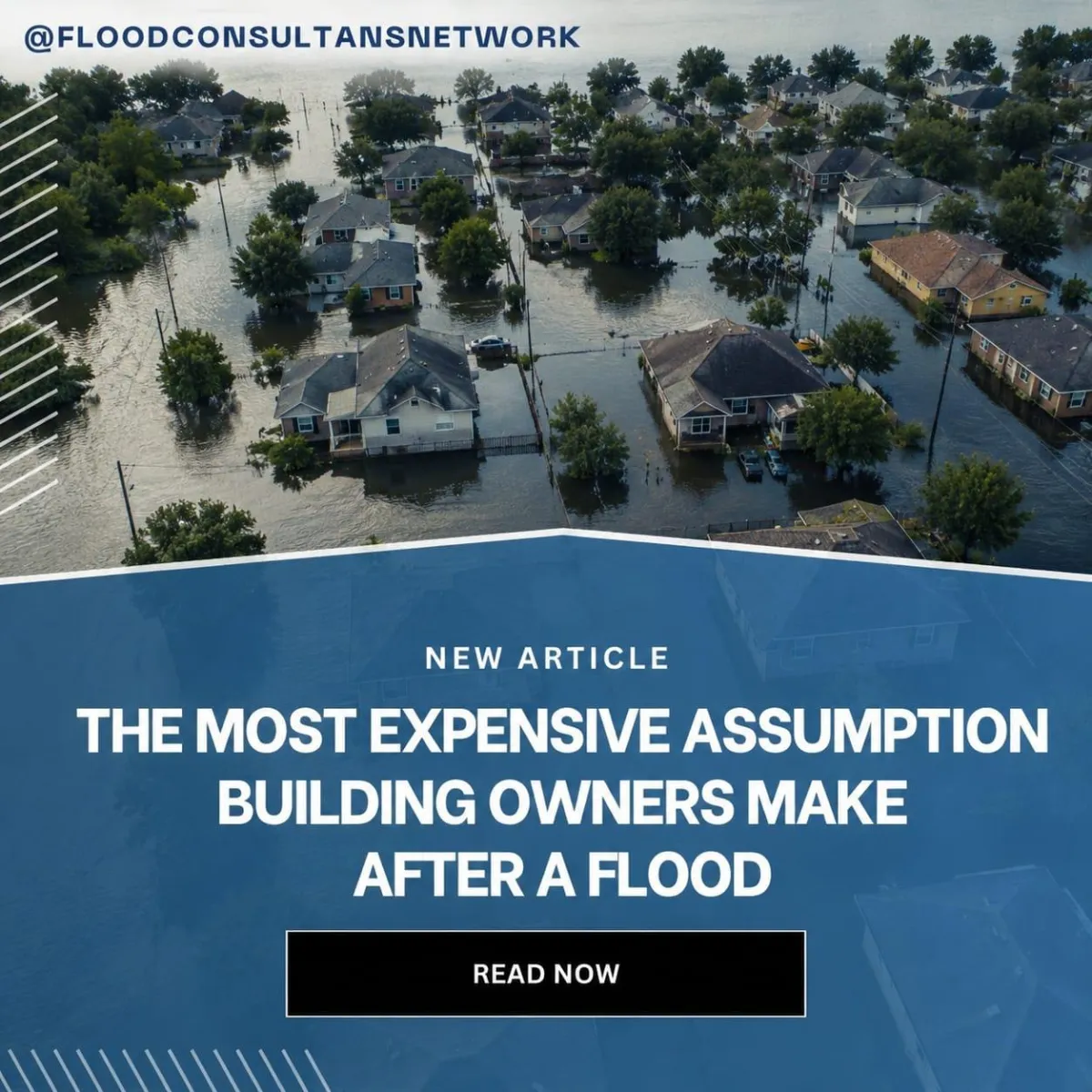
The Most Expensive Assumption Building Owners Make After a Flood
Most building owners expect two numbers to match after a flood:
The contractor's invoice.
And the insurance payment.
It seems reasonable.
If the damage is real and the work was completed, the insurance payment should cover the bill.
Right?
Not always.
In fact, this assumption is one of the most common reasons building owners experience financial surprises after a flood.
The financial loss often isn't caused by the flood itself.
It's caused by the assumption that insurance and contractor pricing work the same way.
Two Different Systems
After a flood, contractors and insurance companies are looking at the same property.
But they are not using the same system.
Contractors price the work required to restore the building.
Their estimate reflects:
Labor
Materials
Equipment
Project conditions
The work needed to complete the job
Insurance works differently.
Insurance pays according to:
Coverage rules
Eligible damage
Documentation requirements
Reimbursement standards
The contractor's goal is to finish the project.
The insurance policy's goal is to pay for covered damage.
Those are not the same thing.
Where the Gap Begins
Problems start when owners assume these two numbers should automatically match.
The contractor completes the work.
The invoice arrives.
Then the insurance payment comes in lower than expected.
At that point, everyone starts asking questions.
The contractor expects payment.
The owner expected insurance to cover it.
The insurance company follows its reimbursement guidelines.
The difference becomes the owner's responsibility.
This is often the moment when people feel like something went wrong.
But in many cases, the real issue started much earlier.
The Assumption That Creates Financial Loss
Most owners never compare contractor pricing to insurance reimbursement standards before work begins.
They assume the systems are aligned.
That assumption creates risk.
Because once work is completed, the costs are real.
If insurance reimburses less than expected, there are very few options left.
The financial gap has already been created.
Why This Happens So Often
Flood recovery moves fast.
Contractors are mobilized quickly.
Decisions are made under pressure.
The focus is usually on getting the property back to normal.
Very few owners stop to ask:
Will the insurance payment and the contractor invoice actually match?
Unfortunately, that question is often asked after the work is done instead of before it begins.
How Building Owners Can Protect Themselves
The best time to understand financial exposure is before recovery work starts.
Building owners should understand:
How flood insurance actually pays
What reimbursement standards apply
Where contractor pricing and insurance pricing differ
What costs may become out-of-pocket expenses
The goal is not to avoid recovery work.
The goal is to avoid surprises.
The FCN Perspective
At Flood Consultants Network, we help building owners understand how flood insurance actually works before financial gaps appear.
Because flood insurance is not the same as flood protection.
And financial losses often begin with assumptions, not water.
Insurance is a tool.
Clarity is protection.
Book a Free Consultation
Want to better understand where financial gaps can occur after a flood?
Schedule a free consultation with Flood Consultants Network.
https://floodconsultantsnetwork.com/calendar
The most expensive assumption after a flood is assuming the numbers will automatically match.